
Given the poor state of West Coast ferry services and the spiralling cost of supporting them, back in late 2022 we began to wonder if there might be a better way of running things. Since CMAL / CalMac / Transport Scotland seemed to be making such an expensive hash of it, we wondered if someone else could do it better. Somewhat out of desperation, we wondered if that ‘someone else’ might have to be islanders ourselves.
What we now know as CalMac has been run as a state monopoly since the 1950s. In recent times that model has been given a facade of competition through the separation of vessel owner (CMAL) from vessel operator (David MacBrayne Ltd), and two subsequent rounds of tendering.
DML had competition in only the first tendering round in 2007, from the giant services company Serco. In the second round in 2016, there was no competition – Serco put in a non-compliant bid, leaving only DML.
No other shipping companies have ever shown a serious interest in bidding for the giant contract. One reason for that reticence is that they have no freedom to choose their own ferries. They are obliged to use CMAL’s vessels, binding them to very expensive working practices, and outdated (commercially high risk) ships.
On top of that, the bidding process is so expensive (it costs millions to assemble a bid), that it’s no wonder there has been very little interest from commercial operators to take on the Clyde and Hebrides Ferry Services (CHFS) contract.
With the third contract round approaching (the current one expires in October) and a background of growing crisis, Scottish Government have now announced that their preference is to make a direct award to David MacBrayne Ltd, without a competition. This does seem to be an admission that something needs to change, and the declared objectives of the direct award are laudable and island-focussed on the face of it (see the words of Cabinet Secretary Fiona Hyslop to the right).
But is it really change at all? And what are the chances that those objectives will be delivered? And critically, are they looking at all the options open to them?
We think not.
Excerpts from Cab Sec for Transport Fiona Hyslop’s announcement of a direct award of the CalMac contract:
…In terms of value and importance to our island communities this is one of the most significant contracts this Government will enter into, and it is vital that we get it right…
…I would like to assure our island communities that I will continue to listen to those who have rightly asked for improved resilience; greater transparency; better communications; responsiveness and sensible flexibility in service; and more certainty for communities…
…We will continue to engage with all of our communities and stakeholders to inform the development of the new contract to ensure that, regardless of the ultimate procurement route, we capture the improvements that we all want to see…
…I understand community expectations for this service, and I want to be absolutely clear – if we ultimately decide on a direct award then, under no circumstances, would that simply mean business as usual…
…Going down a direct award route would help change the ethos of the service by shifting the focus from a commercial arrangement to a model more focused on the delivery of a public service.
…I also, crucially, wish to see a new management culture emerging – one that is more supportive of the communities, customers and passengers served by the network, provides greater transparency in communications, and which strives for continual improvement through an innovative and responsive approach
Full statement here
You can have any colour of ferry you like, so long as its black and white with a red funnel
One obvious option that is not on the table is to break up the DML / CMAL monopoly. To give the opportunity for alternative operators with alternative ships to bid for the right to operate our publicly-supported ferry services.
This could be done on a route-by-route basis (or small bundles of routes), rather than as one huge network. This is exactly how public ferry services are contracted in Norway, and it delivers comprehensive, efficient, reliable and cost-effective ferry services with low fares. Norway is the originator of RET; is leading the world in ship de-carbonisation and has the most comprehensive and admired domestic ferry service in the World. A cornerstone of how they achieve that is route-by-route ‘unbundled’ tendering. (read more here)
What is unbundling?
Unbundling is often maligned as a race-to-the-bottom commercial free-for-all, where only profitable routes survive. But that interpretation confuses unbundling with privatisation. Sometimes deliberately so. Unbundling is NOT privatisation. It is NOT the abandonment of public service obligation. It is simply a different way of contracting out public ferry services that encourages greater competition, and thereby could return better services for users. And better value-for-money for the taxpayer too.

Norway’s ferry services are still highly regulated, with fares and service levels set by government. But their ferry services are delivered by a mixture of competing private companies, rather than by one state-owned monopolist. When a route tender comes up for renewal, four or five competing Norwegian ferry companies bid for the right to operate the route with their own ships. The contract stipulates the minimum service levels they must deliver (frequency, capacity, length of operating day), and the fares they must charge. The government adds any other objectives they require on top – most prominently, they now stipulate that the ships used must be zero-emission. Each company bids to provide the service, with the subsidy they will require to deliver it. The bids are compared on a value-for-money basis, ie the company that offers the best combination of high service levels and low subsidy wins the contract.
This is a truly competitive system, because –
- The ferry operators are also the ferry owners. Bidders’ key objective is to get a competitive advantage in the tender, and they do that by designing the most efficient, most productive ferries they can. They are highly incentivised to design better ferries. CalMac on the other hand have no incentive to run more productive, more efficient ships – they just operate what they are given.
- The route contracts are small, and come up frequently (several routes will be up for re-tender each year). So it is a much more feasible for a medium-sized company to assemble a bid; and if successful, a much more manageable task to take on the operation of a single route. The CHFS contract on the other hand is vast, infrequent and hugely expensive to even assemble a bid. Hence only the biggest companies with the biggest pockets have ever attempted it.
Unbundled competitive tendering is one of the core reasons why Norway can now boast of the most comprehensive, best value, greenest ferry system in the World.
It’s all about the ships, stupid.
The contrast between Norwegian and Scottish outcomes can be seen in the ships that are chosen for the job. Being built right now in the same Turkish shipyard as the four CalMac ‘Islay class’ vessels, is a new ferry for the Norwegian Lofoten Islands. Torghatten Nord (one of Norway’s five competing ferry companies) won the right to continue operating services there, by specifying a high-efficiency, high-productivity ferry (that happens to be all-electric too). They won the bid because they needed to ask for less subsidy than their competitors. Competitive ship design won them the contract. Here’s how it compares with the Islay-class four:


| CalMac’s new ‘Islay class’ ferries | Torghatten Nord’s new ferry for the Lofotens | |
| Total cost | £50 million each | £31 million |
| Car Capacity | 107 | 120 |
| Passenger capacity | 350 | 399 |
| Daily operational hours | 14 | 24 |
| Crew (live-aboard) | Circa 27 | CIrca 11 |
| Capital cost per car space | £467,289 | £258,000 |
| Capital cost per car space per operational hour | £33,377 | £10,764 |
| Approximate annual comparative crewing cost (assuming 2.5 crews and average £52k salary per crew position) | £3.51 million | £1.43 million |
| Crewing cost per car space per operational hour (1 year) | £6.45 | £1.42 |
Not just because the Norwegian ferry is cheaper to build, but because it can operate for 50% longer each day on around 1/3 of the crew, it is three times more capital-productive, and more than four times more crew-productive.
Poor productivity puts pressure on fares and hurts users
The draft Islands Connectivity Plan (published last month – more on that to come) contains proposals to increase fares and limit RET, in order to narrow the gap between CalMac’s fare revenue and its operating costs. For every £3 that CalMac spends on operating our ferry services, it gets only £1 in fare revenue. That could be interpreted two ways – there’s the way that Scottish Government appear to interpret it – fares are too low. Or there’s the interpretation arising from the comparison above – CalMac have a very high-cost, unproductive fleet. It’s not low fares that are the problem, its high operating costs. By continuing with the CalMac monopoly model however, there’s little hope that those high costs will ever be addressed.
If CalMac and Scottish Government can’t run an efficient, productive ferry service, will they give someone else a chance?
That’s the question we wanted to pose to Scottish Government, by investigating the idea of a community-controlled ferry company running the Craignure-Oban service. Our desire was to make a good-faith investigation of how a community operator could deliver the efficiencies we can see in Norwegian operations.
(To be clear however – we as a committee were not proposing to be that operator – we just wanted to explore the principle, to encourage others to come forward.) It was a measure of our frustration with the obvious waste and poor performance in the current system that we were prepared to consider such an option. We could see lots of potential benefits, if given the freedom to specify our own services and the ships that operate them.
An initial scoping study that we commissioned from author and ferry expert Roy Pedersen laid out his proposal and the potential advantages:

- A pair of medium-speed catamarans, each of 80 car and 450 passenger capacity operating between Craignure and Oban
- Option to supplement with a passenger ferry to meet seasonal peaks, and add new passenger routes
- Crew on each ferry of circa 14, shore-based (ie in total for 2 ships, the same number that the MV Isle of Mull has).
- 45 minute transit time for both vessels, with hourly clock-face departure times
- Simple ‘Coffee Cabin’ style catering provision
- Operating costs nearly 30% lower than those estimated for the likely near-term CalMac deployment (at the time of writing, understood to be most likely the FInlaggan paired with the Loch Frisa).
- Route capacity doubled, and operating day extended by up to 6 hours.
- Capability to berth overnight at the existing Craignure Pier, delaying the need for pier replacement
- A community fund, returning any surplus profit to the islands.
After seeing the potential benefits in Roy Pedersen’s study, we hoped to advance this concept by investigating its true commercial viability. Operating models and commercial risks all needed to be assessed, so that we could map a way forward, or decide whether there was a viable route to community control at all. We commissioned a second technical feasibility study to accompany Mr Pedersen’s report, from consultants who had been involved in previous CHFS tendering rounds. It was a lengthy technical work, scoping out the business models and their various risks and benefits. It was this detailed assessment that we attempted to take to the Transport Minister and her officials at Transport Scotland.
Fiona Hyslop refuses to even discuss it
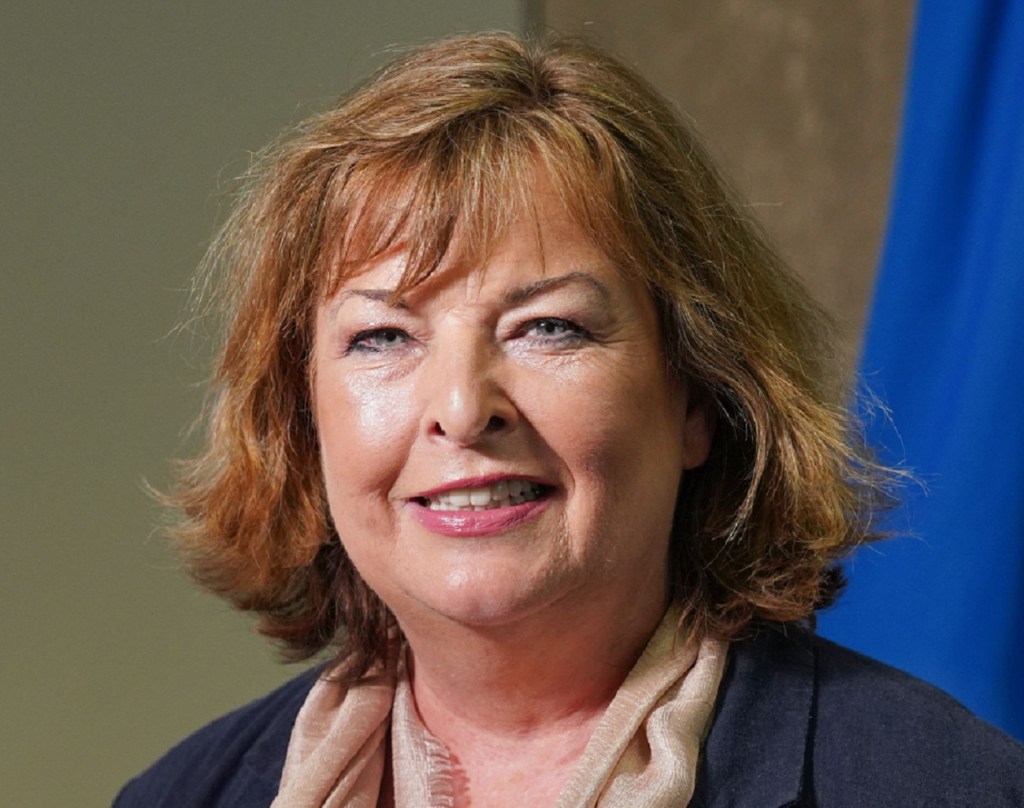
Our objective was not to provoke or embarrass Scottish Government with this initiative, but to engage them in good-faith efforts to investigate all alternatives, ahead of the CHFS bid process we anticipated for this year. There had been repeated public pronouncements by government against unbundling, without which, the venture would be impossible. We knew we had an uphill struggle. But with the draft feasibility study in hand, we made efforts to discuss it with Transport Scotland and the Transport Minister Fiona Hyslop.
We hoped to have a discussion about the pros and cons; for her to hear the arguments, listen to this island community and consider all options for the future of our ferry services.
The Scottish Government have strong island-focussed policies, including the ground-breaking Islands Act with the Islands Plan at its centre. Transport improvement, community empowerment and sustainable green development are among the key strategic objectives of the plan, and all could have been met by the concept of a community ferry company.
We hoped therefore that government would recognise the opportunity, or at least recognise the potential benefit of discussing ALL options, including unbundling and community control of ferry services. Despite asking for a meeting, we were refused. Twice. The prospect of an unbundled and community-controlled ferry company is therefore closed. We are not allowed to consider it.
How would you like your CalMac monopoly served?
There would certainly have been huge hurdles to overcome in setting up and operating a new community ferry company. But we hoped at least for an open discussion of the pros and cons. For all options to be on the menu. Instead however, the Government have repeated their determination to continue with a single CHFS contract, but this time the intention is that the tendering process will be skipped entirely, and David MacBrayne Ltd will be given a direct award.
The question being posed by Scottish Government is not “what kind of ferry service should we have?” , but “what kind of CalMac monopoly ferry service should we have?”.
Transport Scotland are currently running a consultation on the proposed direct-award, which concludes this Friday, March 8th. The questions maybe very limited in scope, but we would encourage you to respond. If as looks almost certain, CalMac are awarded the CHFS contract without a contest, the wisdom of that decision will only by tested by time.
FOLLOW THIS LINK FOR THE CHFS3 DIRECT-AWARD CONSULTATION
Listen below to our chair’s interview on the topic on Good Morning Scotland –
The Scottish government’s refusal to engage in a meaningful dialogue on this important topic is an abdication of their responsibilities and a disgrace. The MIFC have put together a coherent and very well thought out proposal. I commend their efforts and hope they can keep up the good work. Stay strong and keep fighting.