


This morning the government have announced the details of the ‘Island Business Resilience Fund’ – £4.4 million of funding to support Hebridean businesses impacted by the ongoing ferry crisis. After being passed the press release and asked for comment, we learned that businesses on Mull and Iona are not eligible to apply.
We welcomed news of the fund first announced in April of this year, and immediately wrote to the Cabinet Secretary FIona Hyslop. We detailed the harm being done to Mull and Iona by the replacement of the MV Isle of Mull (IOM) with the much smaller MV Coruisk. We offered help in identifying businesses particularly harmed, and also invited the Cabinet Secretary to meet with us to discuss the scheme and other critical ferry-related matters. Our invitation was declined, and our offers of help ignored.

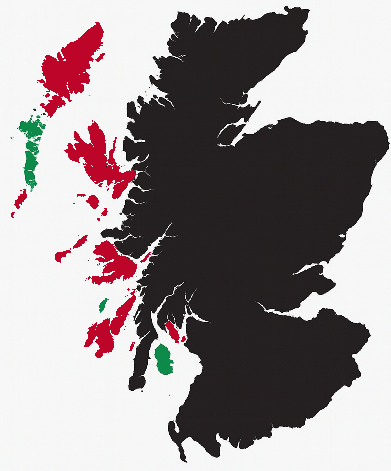
We now learn that this fund will only be available to businesses on islands that have had 15% or more of their sailings cancelled in the past three years, and that therefore only a small proportion of the islands truly impacted by the ferry crisis will be eligible. Mull and Iona have been excluded from the fund, for reasons that are as baffling as they are unjust.
In our April letter to the Cabinet Secretary, we detailed how the IOM’s condemned emergency slides were affecting us. The substitution of the MV Isle of Mull with the Coruisk led to a reduction in capacity from 60 to 40 cars, and from 962 passengers to just 250. Of course, not every sailing is full to capacity – so we examined carrying stats and were able to estimate back then that 5,000 people would be denied travel to Mull. That was just until the middle of June – which was at that stage the anticipated return date for the IOM.
The actual experience has been far worse. The return of the MV Isle of Mull was first put back to the end of June, and now it looks likely that it will continue to be absent well into July, with no end in sight.
Visitor numbers are significantly down, with accommodation providers reporting unprecedented mid-season vacancies, restaurants are half-full and tour operators carrying far fewer people than they normally would. Countless attempts to book holidays on Mull and Iona are being thwarted by the basic inability to get a space on the ferry.
Our analysis of carrying figures suggests that up to the end of June, 7,100 passengers were denied travel to and from Mull. If continued through to the end of July, that figure will increase to 12,800. That’s a reduction of 8% in the number of people travelling to Mull. The picture with vehicle carryings is similarly bad. More than 8,300 car journeys to and from Mull will have been denied by the end of July, or more than 10% of what we should expect.
In terms of vehicle capacity reduction, the figure is 22% – ie higher than the equivalent figure in the scheme which only counts cancellations.
This is the third successive year we have had the route’s capacity cut back in this way, during our critical summer tourist season. Despite this hard evidence both of reduced capacity and reduced visitor numbers, we are being excluded from the scheme to compensate for it. The ferry shambles is about more than just the number of sailings cancelled – it is about the fundamental undermining of Hebridean business and society, by this never-ending crisis of capacity and confidence. The damage done to our tourism sector will last long after the ferries are fixed.
The criteria that the Minister has come up with are not just blunt and crude, they are discriminatory. It seems to reflect an ignorance of how damage is being inflicted on island communities.
We also question whether a scheme excluding some islands on the basis of an arbitrary ferry cancellation threshold complies with the Islands Act. We will be requesting evidence of how Transport Scotland assessed this policy against the requirements of the Act.
Regrettably, rather than being a welcome mitigation for the damage done by mis-management of the ferry system, this proposal seems to only highlight the distance between remote Central Belt administrators and the communities they are working for.
